

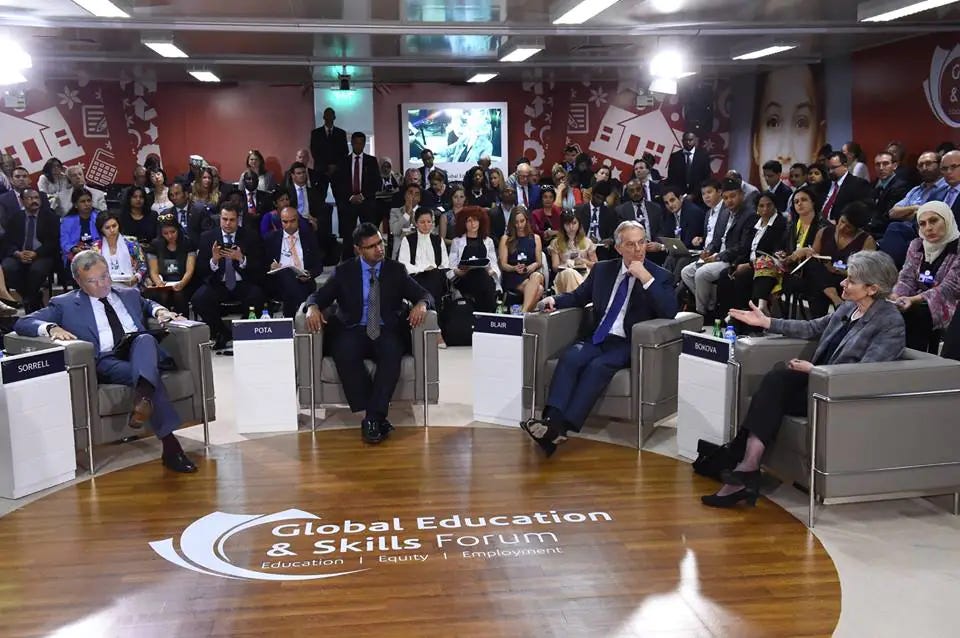
Introduction
I was brought in to lead the digital overhaul of one of the most prominent annual gatherings in the international education sector. The forum had a reputation that significantly outpaced its digital infrastructure. Attendees were navigating an outdated registration process, and the existing event app did almost nothing to serve them once they arrived. The assignment covered everything from the pre-event registration experience through to live content delivery during the event itself.
What Was Broken
The registration flow was the first problem. It was not fit for an event of this scale or standing and created unnecessary friction before attendees had even arrived. The app, intended to serve as a guide and networking tool during the forum, was too limited to do either job well. Participants could not use it to manage their own schedules, identify who was in the room, or navigate between sessions. For an event with over ten simultaneous talks running across three days, that was a structural problem.
The live content side carried its own constraints. The agreement required all recorded material to be processed and live on the web within 45 minutes of a talk ending. On a multi-track programme running from morning to evening, that meant a near-constant operation with no room for backlog to accumulate.
Rebuilding the Registration and App Experience
The registration system was rebuilt from the ground up with the attendee experience as the primary design constraint. The goal was to reduce the number of steps required, clarify the confirmation flow, and make the pre-event experience feel appropriate to the forum’s standing.
The app was developed to support live networking and scheduling during the event. Attendees could browse the full programme, build a personal schedule, and find other participants by profile. For an event where the hallway conversations often matter as much as the formal sessions, having a reliable tool that connected attendees to each other and to the programme was the practical baseline the forum needed.
Managing the Live Stream Operation
The content operation was the most demanding part of the engagement. Ten or more sessions ran simultaneously across the three-day programme, covering debates, panels, masterclasses, and mentor-format sessions. Each one was being streamed and recorded, and each one had to meet the 45-minute processing window.
The operation required a clear internal workflow with defined handoffs between the capture team and the processing team, and no tolerance for tasks sitting unassigned. Every time a session concluded, the clock started. We also cut short-form clips from the live streams in real time for distribution across social channels. That added a second output track running in parallel to the primary processing pipeline, with its own timing expectations.
Results
The SLA was met throughout the forum. No session missed the 45-minute window. The registration system and app both received positive responses from attendees, with the scheduling and networking features seeing consistent use across all three days. The short-form social output extended the forum’s reach beyond the venue in real time and contributed to increased engagement from audiences who were not present.
Conclusion
The real constraint in this engagement was not technical complexity but operational discipline. Multiple output streams running simultaneously, with fixed time requirements on each, does not allow for improvisation when something goes wrong. The preparation had to be detailed enough that the team could execute under pressure without needing to make structural decisions mid-operation. The digital presence the forum projected matched the stature of the event itself, which is what the brief required.