

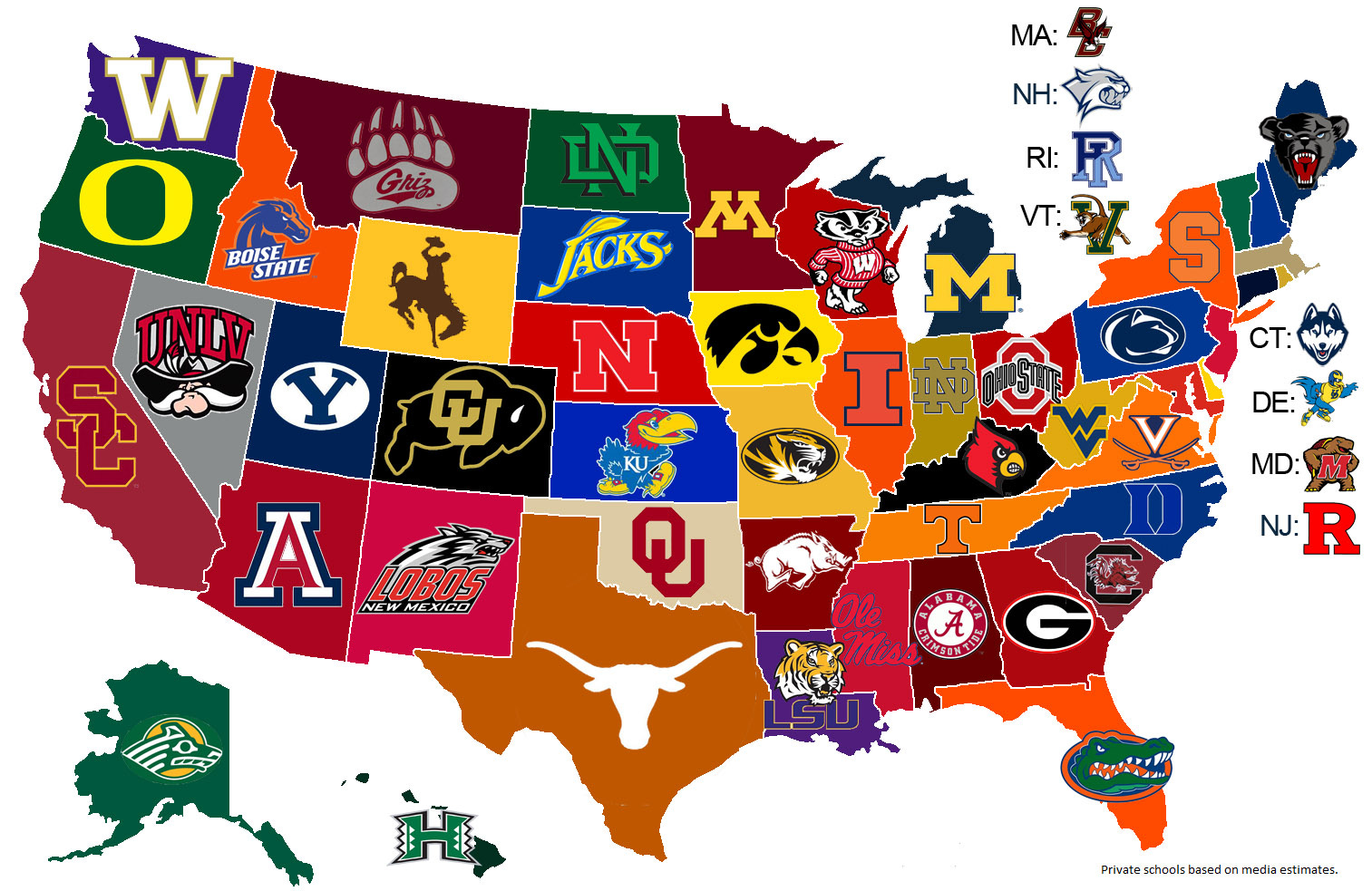
A few years ago, when schools began leaping from one conference to another in a frantic, money-driven realignment, it was easy to laugh. It was chaos. But beneath the chaos sat a problem that money and laughter kept obscuring: American college football has no reliable way to let the best teams prove it, or force the worst to face consequences. Where else can a team finish undefeated and get denied a championship shot? Where else can a program dominate its league for decades and never test itself against the best?
The sport protects powerhouses. Underdogs stay underdogs. The committee decides who matters, and tradition does the rest.
There is a fix used across the globe. In America, it gets laughed out of the room. The fix is relegation.
To even suggest it sounds absurd. Imagine Notre Dame, in a fallow period, playing Eastern Washington. Imagine Boise State, in its prime, earning an automatic seat alongside Alabama and Ohio State. The idea does not just swap teams — it admits that the entire architecture of college football is broken. In a sport ruled by tradition, television contracts, and donor money, that admission is almost impossible to make.
But set that aside. If fans and power brokers actually accepted the premise, how would it work?
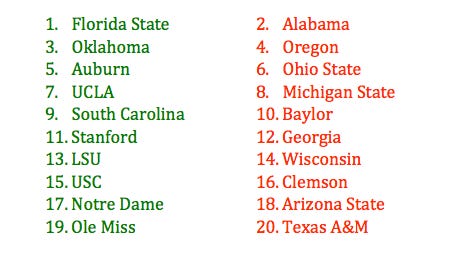
Start with what exists: 125 FBS schools, each playing roughly 13 games. Now sort them not by geography or history, but by last season’s results. Split them into five tiers of 21 teams (the top tier gets 20). Within each tier, divide into two divisions: odd-ranked teams in one, evens in the other.
The schedule runs itself. Each team plays everyone in its division, nine games, plus two cross-division games and one protected rivalry. Twelve games. Every one of them means something.
At the end of the season, the top four teams in each tier enter a playoff for that tier’s title. The bottom teams face relegation: the second-to-last teams in each division play a survival match, and the loser drops. In the tier below, the third and fourth-place finishers compete for promotion alongside the top two finishers, who ascend automatically.
A team like Kansas State or North Carolina, coming off a strong season, could enter the top league. Texas A&M or Ole Miss, after a bad year, could slip out. The table reflects what programs actually did, not what they used to be.
This structure does two things the current system cannot.
It creates competitive balance. Teams play opponents at their level, every season. A program with a sudden surge of talent, Boise State in 2007 for instance, rises on results and gets the matchups it deserves. A legacy program in decline does not cling to prestige by reputation alone.
It also respects time. Oregon is a powerhouse now. That may not be true in 2030. Dynasties rise and fall on merit, not on television deals or poll momentum.
A golden parachute arrangement, financial buffers for relegated teams modeled on the English Premier League’s solidarity payments, could soften the transition and protect athletic department budgets. The logistics are solvable.
The real obstacle is psychological.
Americans want permanence. The blue-blood program, the eternal powerhouse: these are not just sports preferences, they are cultural fixtures. Alabama playing in a second tier is almost unthinkable. A little-known school climbing to the top feels like it violates some unspoken rule of order. It clashes with loyalty to brands, comfort in hierarchy, and a deep suspicion of uncertainty.
That uncertainty, though, is exactly what makes football compelling everywhere else. In England, every match matters, not just for glory but for survival. Fans of a mid-table club dream not only of a title but of a climb. Fans of a top club live with the real possibility of falling.
College football is already a sport of dramatic inequality. Access to the championship runs through polls, committees, and historical reputation. Relegation replaces that gatekeeping with a transparent ladder: perform and rise, stumble and fall.
Americans tolerate a different kind of chaos. Schools jump conferences for money, undefeated teams get left out of the playoff, dominant small programs get ignored for decades. That chaos has a clear beneficiary: the programs and conferences that already have power. Relegation would not benefit them. That is why it will not happen.
Every game becomes a referendum on the future. The season becomes a story of rise and fall, not just wins and losses.
A system where results matter more than reputation. That may be the hardest sell of all.