

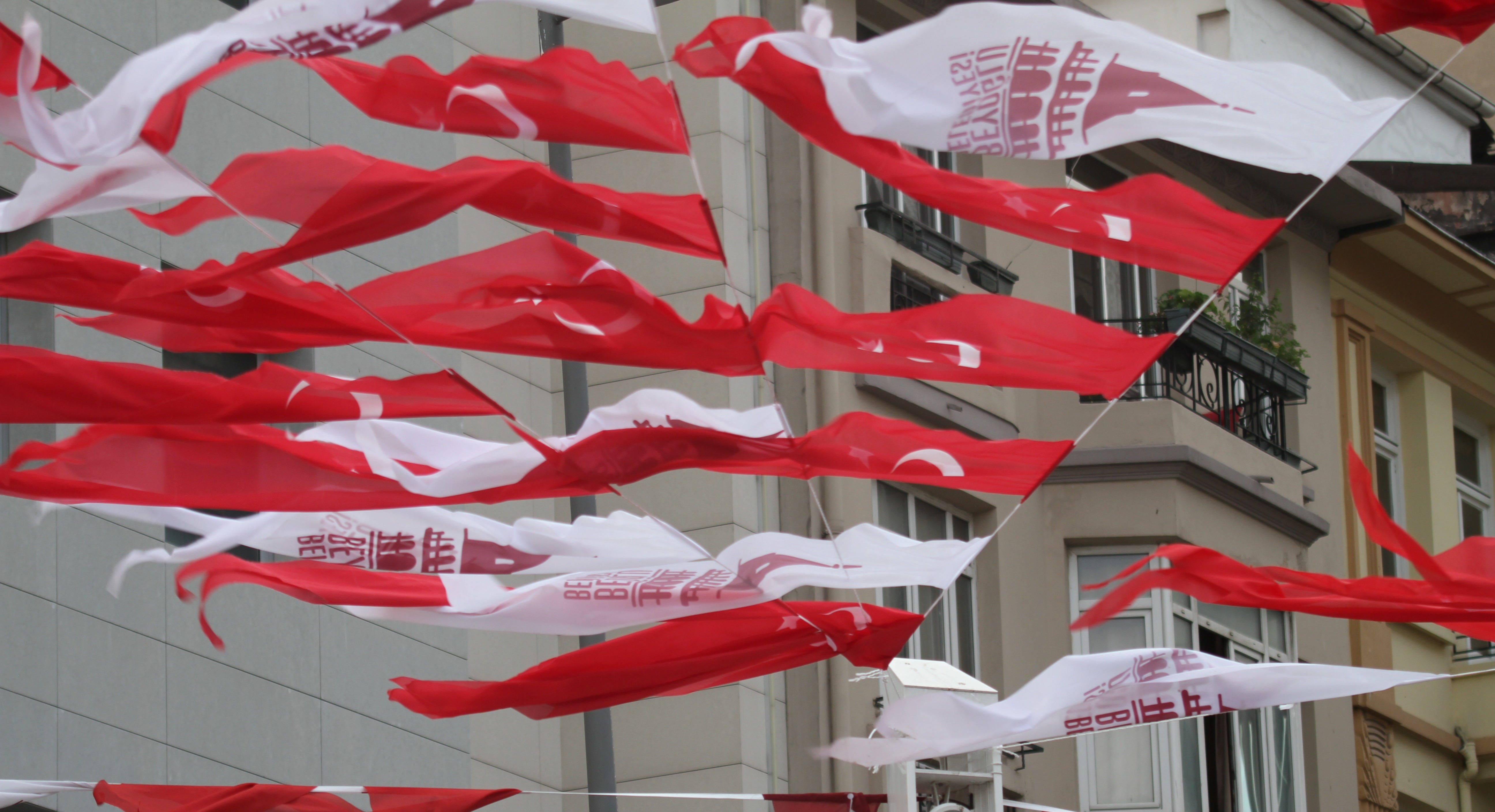
You arrive into Istanbul expecting a metaphor and instead you get a city that just works. Trams run on schedule. The ferry between the European and Asian sides costs less than a coffee. Grand Bazaar merchants speak enough of every language to close any deal. The Bosphorus sits between two continents and nobody treats that as unusual, because it hasn’t been unusual here for three thousand years.
By the third day you stop intellectualising it and start paying attention.
I’d come from the same circuit most people do — SE Asia, West Africa, North Africa, enough miles that arriving somewhere no longer triggers the automatic optimism of first-time travel. What Istanbul does instead is more useful. It gives you a reference point that none of those places could, because Istanbul has been, at various moments in its history, the centre of the world. It has absorbed every major civilisation that passed through it, digested them, and returned something distinctly its own. The city is not East or West. It is the space between them, which is a different thing entirely.
What I was actually watching, most of that week, was how people used their phones.
Not in the look-at-the-kids-on-their-phones sense. In the sense that the way people in a city use communication tools tells you a great deal about what those tools mean to them, which is not necessarily what the companies building those tools think they mean. In Istanbul in July 2017, WhatsApp is not a messaging app. It is a logistics layer. Market traders coordinate with suppliers on it. A restaurant owner negotiates a fish price on the same thread where he’s confirming a table booking. A tour guide runs four simultaneous group chats without glancing down. The app is infrastructure in the same functional sense that the tram network is infrastructure: not something you think about, the thing that makes everything else possible.
Twitter is different here. The surface use looks similar to London — commentary, links, news. But the role it plays under pressure is something you can sense without seeing it directly. Turkey blocked Twitter in the year of the Gezi Park protests. They blocked it again briefly the following year. The pattern of reach-for-the-platform-when-things-get-loud and reach-for-the-switch-when-that-gets-inconvenient has been played out here in a way most Western users have no frame of reference for. The people in this city are not naive about what it means to have your communication infrastructure owned by a platform a government can pressure or cut.
That changes what the platform means. An app people use to post football takes is not the same app when it becomes the fastest way to mobilise ten thousand people to a location. The code is identical. The function is not.
This is the gap I keep finding between how platforms describe themselves — advertising businesses, engagement products, content networks — and what they become when there is actual pressure on the infrastructure beneath them. Cairo in 2012 made it legible for the first time. The following years produced a library of examples. Istanbul is not on that list yet, but it has the structural conditions: a population that has used these platforms under pressure, a government that has demonstrated willingness to intervene, and a city wired enough that cutting the platform is not a neutral act. It costs.
I spent one afternoon in a tea house in Sultanahmet talking to a man who ran a small logistics company. He had a fleet of seven vans, coordinated entirely through WhatsApp. I asked what he would do if WhatsApp went down. He looked at me with an expression that suggested the question was either very stupid or very interesting. “The same things I did before. But slower.”
Before. That’s the word. He had a before. He remembered what moving information without these tools felt like and had maintained enough of the old system to survive the transition back, even though he hoped he’d never need to. The app had not replaced the old network. It had accelerated it.
Most of the people building these platforms in San Francisco and Seattle have no before. The tool is the category. Its absence is not a contingency they plan for, because in the markets where these companies live and work and test, the absence is theoretical. Here it is a memory and a plausible future at the same time.
Twitter’s stock is down roughly 30% from its 2014 high. The internal argument about what Twitter actually is has been running openly for three years, and nobody has won it. Is it a broadcast network? A news platform? A public square? The company calls itself a live commentary service in some periods and a conversational platform in others. The ambiguity is not strategic. It reflects a genuine uncertainty about what the product is, which flows directly from an uncertainty about who it is for.
In Istanbul, there’s no ambiguity about what Twitter is for. It’s for when things move faster than any other channel can. That clarity comes from experience that people in Menlo Park don’t have, because the stakes have never been that high for the people building it.
The ferry between the European and Asian banks takes twenty-five minutes. Both shores are Istanbul. The water between them is not a border; it’s a connection that happens to look like a division if you approach it from the wrong angle.
That feels like the right framing for what these platforms are building without quite knowing it. The infrastructure layer between people and information in environments where both are contested. The value of that layer becomes visible only when it is threatened, and the people building it are, by and large, not in places where it has ever been threatened.
That might matter. It might matter soon.