

The Situation
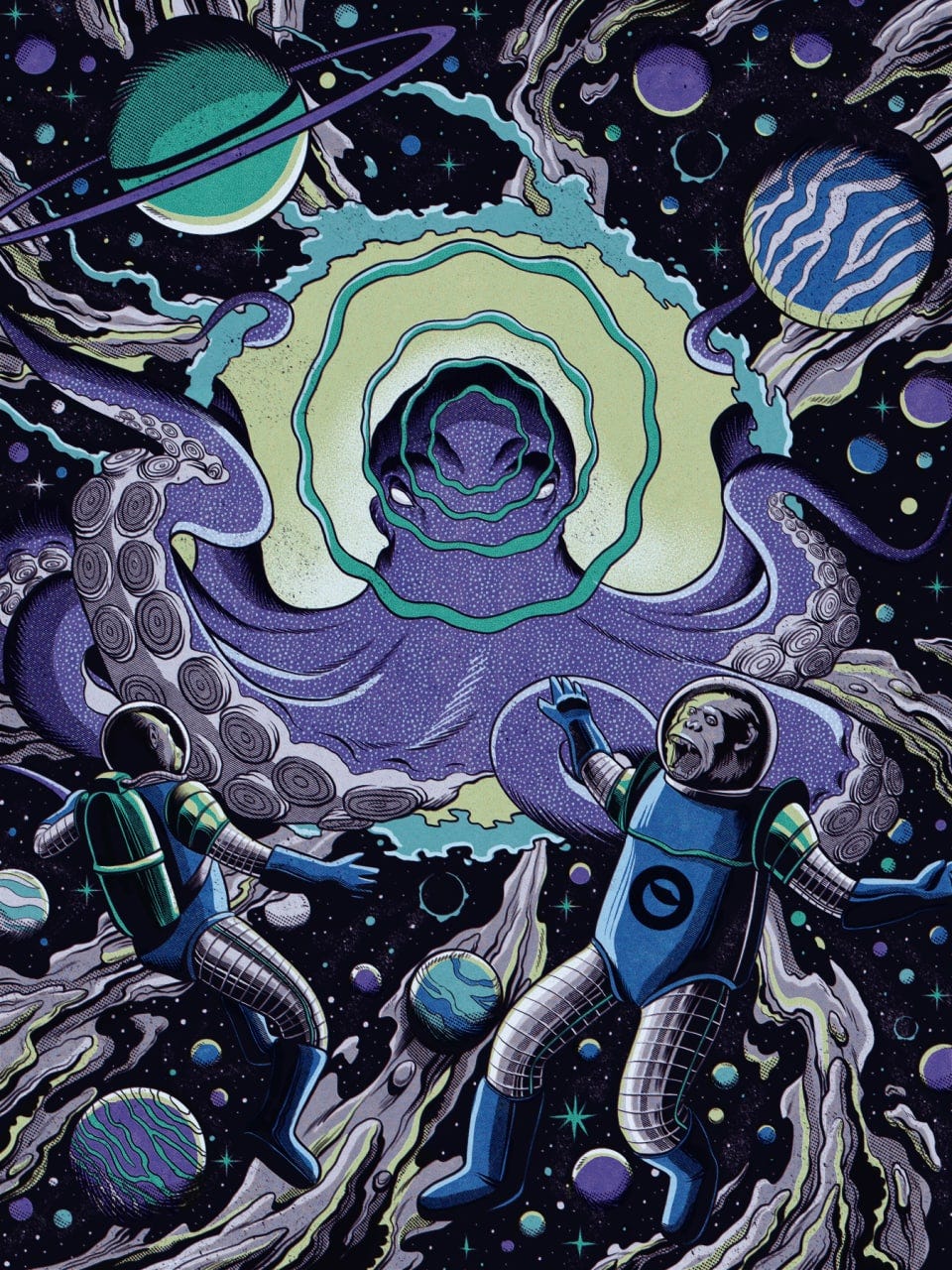
The project started as a creative side effort during my work on a larger partnership with a Luna Foundation initiative. We wanted to create something visually distinctive for the Luna community, an abstract NFT concept featuring two astronauts floating near a green planet. The design included a helmet-clad monkey in the corner, meant to add intrigue and get people talking about what it represented. We chose a color palette of blues, purples, and greens to match the sense of exploration that defined the Luna community.
What I Saw
As we progressed with the design, two major challenges became apparent. First, Terra's NFT infrastructure was still developing, with no clear standards for distribution. The technical process was uncertain and presented significant hurdles. Second, just as we were finalizing the artwork, Luna's collapse occurred. The crisis shifted priorities dramatically, and our small side project got put on hold. The timing couldn't have been worse for a project that relied on both technical infrastructure and community engagement.
What We Did
We worked with an artist I knew well to bring the vision to life. The final design featured the astronauts and the mysterious monkey figure, with careful attention to the color palette and composition. We spent time refining the narrative around the artwork to ensure it felt authentic to the Luna community's spirit of exploration. Despite the challenges, we maintained the design files and documentation, keeping the project alive in case circumstances changed.
What Happened
Ultimately, Astronaut Odyssey never launched as an NFT. The combination of technical uncertainty in Terra's ecosystem and the broader Luna collapse made it impossible to complete the project. While the design exists as a creative artifact, the NFT itself was never minted.
What I’d Do Differently
If I were to attempt a similar project again, I would:
• Evaluate the ecosystem more thoroughly before committing resources
• Explore alternative platforms from the start
• Document the process more systematically
• Build contingency plans for technical and ecosystem risks
The Lesson
The project taught me something specific about working in volatile ecosystems: a strong creative vision means nothing if the infrastructure underneath it can disappear overnight. The design was ready. The audience was there. The ground fell out. That's a different problem than bad art or bad marketing, and it requires a different kind of planning.