

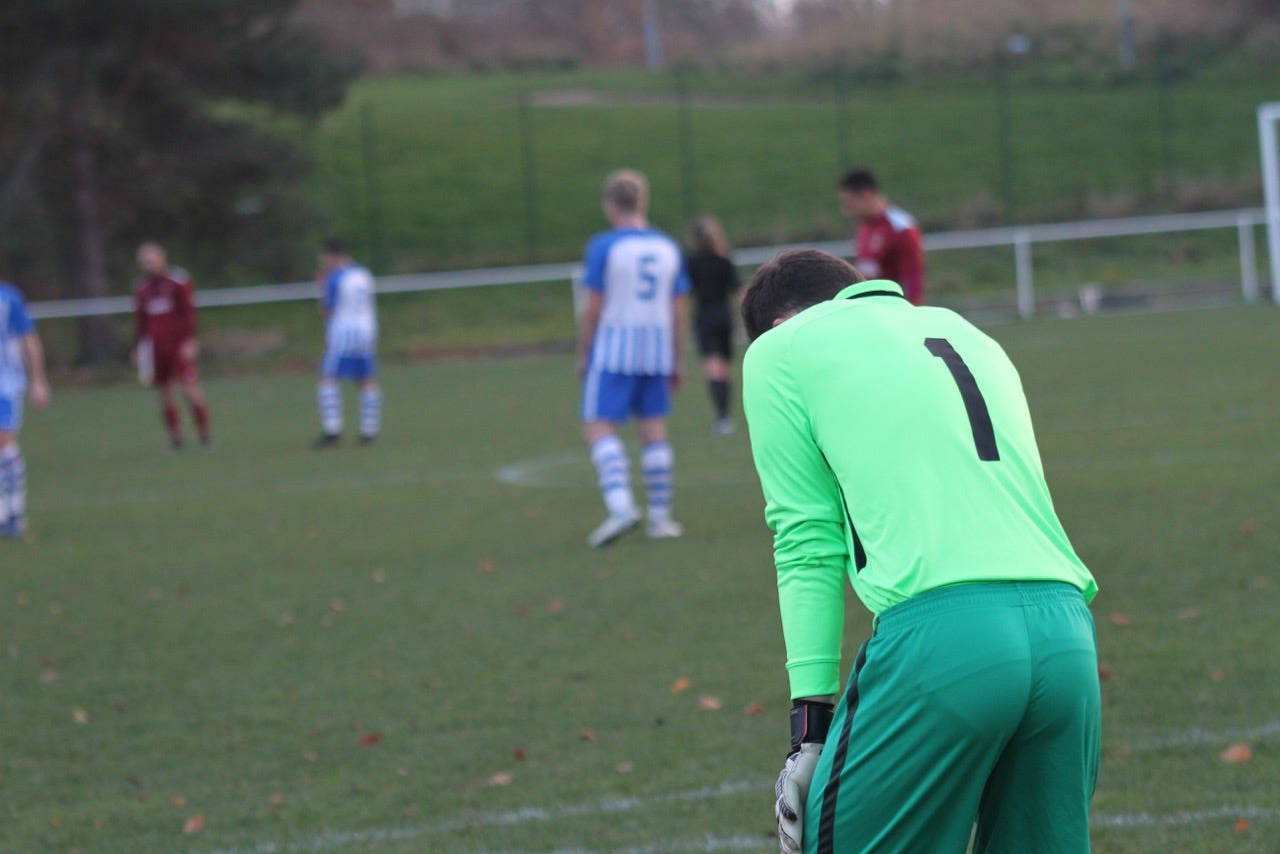
A Spanish football club was accused of betting $600,000 against itself.
The truth is stranger.
The club bought insurance.
The insurance company used a prediction market as reinsurance because the pricing was better than traditional markets.
This is the first documented case of prediction markets replacing traditional reinsurance.
Almost nobody noticed.
That is usually how large financial changes begin. Not with a speech. Not with a bill. Not with a bank CEO on television explaining the future. They begin with some odd little transaction that sounds, at first, faintly ridiculous.
A football team hedged relegation.
A broker found better pricing on Kalshi.
A market made of small contracts quietly did the job that used to belong to reinsurers.
Here is the strange part: everyone looked at the football team. Almost no one looked at the insurance mechanism.
The team was Club Atletico Osasuna, a Spanish La Liga club that faced the risk of relegation in May 2026. Relegation, for people outside football, is not a metaphor. It is a financial trapdoor. Drop from Spain’s top league and broadcast revenue falls. Sponsorships weaken. Player contracts become heavier. Planning turns into triage.
So Osasuna bought protection.
According to Fortune, the club bought a 1.2 million euro relegation risk policy from Howden, the global insurance broker. That part was boring. Clubs have bought relegation insurance for years. The weirdness came next.
Howden offloaded the risk through Kalshi, the U.S. prediction market.
The trade involved 3.5 million contracts. The total value was $591,600.
To ordinary fans, that looked like Osasuna had bet against itself. The optics were awful. A club fighting to stay in La Liga seemed to have a financial position that paid if things went badly.
But Kalshi gave Fortune the clean, almost dry explanation: “Clubs have been buying relegation insurance for decades. That’s also what happened here.”
Think about what that means.
The thing that looked like gambling was insurance. The thing that looked like scandal was risk transfer. The thing that looked like a wager against a team was, in structure, reinsurance.
Osasuna lost 1-0 to Getafe. Then the story took another turn. Osasuna avoided relegation anyway.
The policy did not blow up. The trade did not decide the season. The scandal did not become the scandal people expected.
But the financial plumbing had changed.
A traditional insurance broker had found a public prediction market more attractive than traditional reinsurance pricing.
That sentence should bother the insurance industry.
Because insurance has always had a pricing problem. It looks scientific from the outside. Actuarial tables. Cat models. Loss curves. Capital charges. Big firms with blue logos. Serious people with spreadsheets.
But the basic act remains very old.
Someone takes a risk. Someone else prices it. Capital sits behind the promise. If the bad thing happens, money moves.
The genius of prediction markets is that they attack the pricing layer. They take the question that insurers ask in private and put it into a live market.
Will this team be relegated? Will this hurricane make landfall above a certain wind speed? Will New York’s temperature exceed a threshold? How many tornadoes will be recorded this month?
Those are insurance questions wearing different clothes.
Kalshi already has weather markets tied to daily temperatures, hurricane wind speeds, and tornado counts, with NOAA data serving as the settlement trigger. Risk Market News described the direction plainly: prediction markets are coming for insurance risk.
Weather is the obvious place to start.
Weather has clean triggers. A station records a number. NOAA publishes it. The contract settles. No claims adjuster drives to a roof. No argument over whether damage came from wind or flood. No three-month wait while forms pass between systems.
A temperature is a temperature.
A hurricane wind speed is a hurricane wind speed.
A tornado count is a tornado count.
This is what insurance people call parametric coverage. The payout is tied to an event, not a loss investigation. If the river reaches a certain height, payment. If wind speed passes a certain level, payment. If rainfall exceeds a threshold, payment.
Prediction markets are, in their raw form, parametric machines.
They ask yes or no. They settle against public facts. They move price in real time.
A hurricane approaches the Gulf Coast. Traditional insurance is mostly frozen. The policy was written months ago. The reinsurer’s book is set. The homeowner cannot suddenly buy protection as the storm turns north because adverse selection ruins the model.
But a prediction market can move minute by minute.
Jeff Yass of Susquehanna has argued that prediction markets can hedge hurricane risk parametrically, in real time, as storms approach. That sounds like something from a trading desk because it is. Susquehanna made its fortune understanding probability when other people saw noise.
Insurance executives are starting to pay attention. Carrier Management recently asked, “Predicting the Insurability of Prediction Markets.” Claims Pages reported that the insurance industry is eyeing prediction markets for catastrophe risk and faster payouts.
The phrase “faster payouts” matters.
Insurance has two emotional moments. The first is when you buy it and hope you never need it. The second is when you need it and discover whether the promise was real.
Most of the industry’s trust problem lives in that second moment.
A hurricane hits. A claim is filed. An adjuster comes. A dispute begins. The check arrives late. Or too small. Or after the contractor has doubled the estimate.
Prediction markets offer a brutal simplification. If the event happened, the contract pays. If it did not, it expires.
That simplicity is powerful.
It is also dangerous.
Because the Osasuna case exposes the great problem hiding in the new model: incentives.
If a farmer buys protection against drought, the farmer cannot make the sky stop raining. If a coastal hotel buys hurricane protection, the hotel cannot steer the storm.
But a football club can influence football outcomes. Players can miss chances. Managers can pick lineups. Executives can make choices that affect performance.
This is the moral hazard problem, and it is not theoretical.
American sports fans already understand a version of it. NBA tanking is a long, open secret. Teams lose now to improve draft odds later. The behavior can be rational and still corrode the competition.
Now add a contract that pays when a team falls.
That does not mean Osasuna did anything wrong. The facts we have point to insurance bought through a broker, with the risk laid off through Kalshi. But the structure makes people uneasy because it touches a nerve. A market tied to an outcome can become a temptation when participants can affect the outcome.
Insurers have lived with moral hazard forever. Fire insurance can change behavior. Health insurance can change behavior. Deposit insurance can change bank behavior. The industry built rules, exclusions, inspections, deductibles, capital requirements, and fraud teams around that fact.
Prediction markets will need their own version of that infrastructure.
The CFTC issued an advisory in March 2026 on insider trading in prediction markets. Kalshi now requires certain users to disclose their employers before trading in higher-risk contracts. Kalshi itself is regulated as a Designated Contract Market, which is a formal CFTC designation, not a gambling license.
The framework is being built. It is just early.
Semafor, which originally broke the Osasuna story, asked whether this was the “good future of prediction markets.” The good future is one where markets serve real economic purposes instead of just settling celebrity death pools and election arguments.
That future is closer than it looks.
A Spanish football team needed insurance. A broker found a prediction market with better pricing than traditional reinsurers. The trade went through. The season ended. Nobody lost their house. Nobody went to jail.
And a financial precedent slipped into the world without anyone writing a law, filing a lawsuit, or holding a press conference.
That is usually how large changes begin.