

Introduction
My photography background was generalist. Headshots, food and drinks, product work for hospitality clients — the kind of work where you control the environment and the subject waits for you. Sports photography is the opposite of that. The subject does not wait. The light is whatever the weather decides. The moment is gone before you have decided how to approach it. I started shooting at a local football club’s playoff matches because I wanted to understand that discipline, not because I had a plan to make it a career.
How I Got Into the Room
The reputation I built at those matches was modest and local: someone who showed up, delivered consistently, and understood what footage a club actually needed. That was enough for a different club — one playing at a higher level — to bring me in as a backup photographer for their fixtures. The expectation was supporting role. I would be there if something went wrong with the primary coverage.
Something went wrong with the primary coverage.
24 Hours
For a fixture between two promotion-chasing sides, both teams’ lead photographers became unavailable. With less than 24 hours to kickoff, I was asked to cover it alone. The match had real weight to it — both clubs were eyeing the same promotion slot and the outcome had standing implications. That context did not make the photography problem easier. It made the standard of coverage more visible.
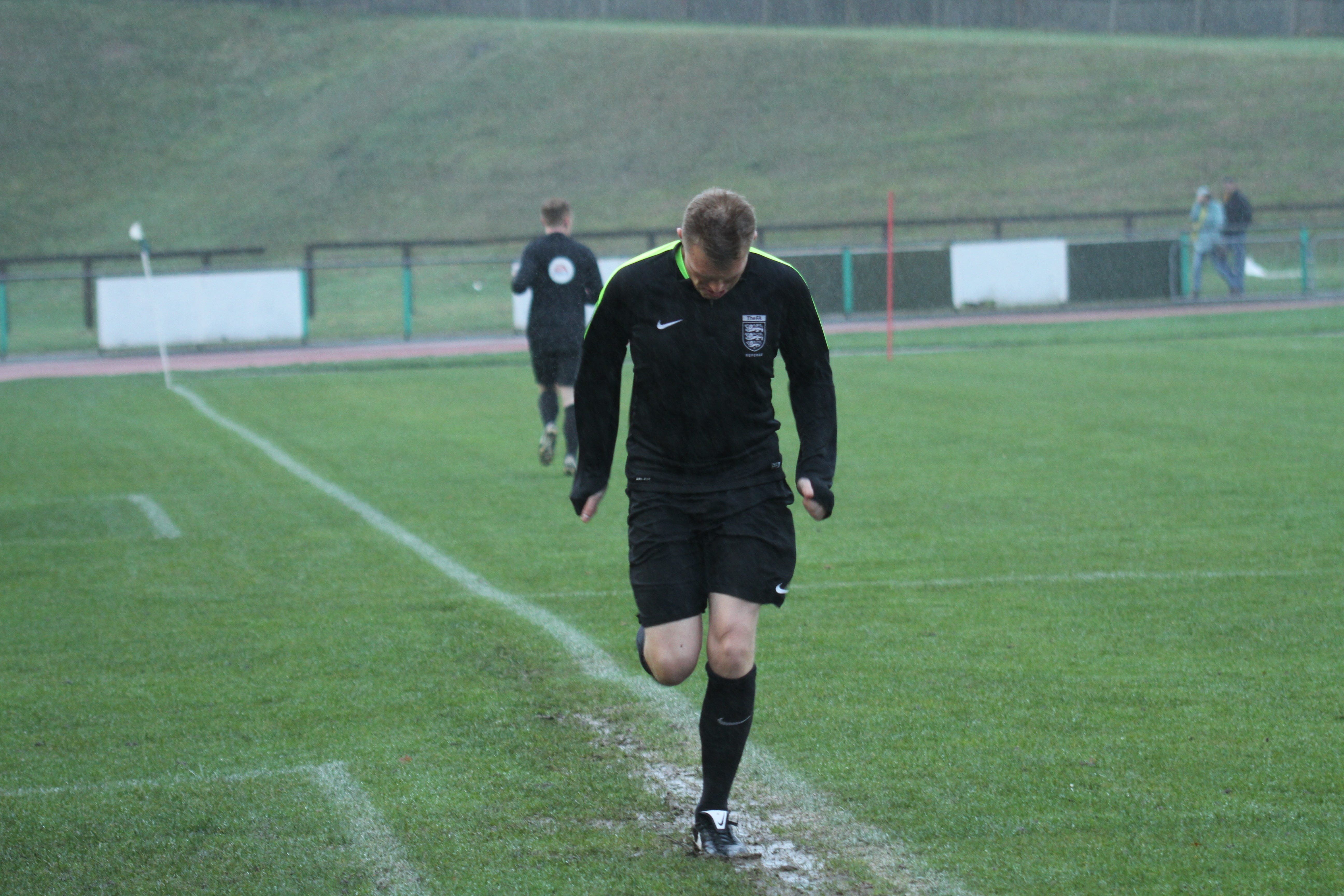
The weather on the day was poor. Rain throughout. Conditions that make handheld shooting unreliable, that flatten contrast, and that put equipment through more than most shoots demand. Neither team postponed. Both sides played the full match, and I shot from start to finish, covering both ends of the pitch and serving both clubs with the same attention.
What the Shoot Required
Covering both teams alone changed how I moved. With a shared primary photographer, each person takes a side or a half and they coordinate. Alone, I had to anticipate play well enough to position for moments rather than react to them, and to shift between sections of the pitch without losing either team’s narrative. The 50mm and longer glass both saw use. The rain meant working with conditions rather than compensating for them — waiting for moments where the weather added something to the frame rather than fighting it for every shot.
The delivery was 300 photographs, sent to both clubs promptly after the match. Of those, five were selected for inclusion in the matchday programme for the end-of-season promotion final. That programme goes out to every supporter at the ground. It is the kind of placement where the photograph has to hold up against close inspection, on print, without any ambiguity about whether it belongs there.
Accreditation
Following that fixture, the national league extended a Photography License to me. The accreditation formalises access to professional fixtures and press areas across the division. It was not something I had applied for. It came from the work being visible to the right people at the right moment.
Conclusion
The career shift from commercial photography to sports photography was not a plan. It was a set of decisions made one at a time, each one informed by the previous, none of them made with a clear destination in mind. What I learned from that fixture — and from the months of lower-stakes matches that preceded it — is that accreditation in a professional context is a record of what you have already done rather than a qualification for what you are about to do. The license followed the work. That is the only order in which it could have arrived.