

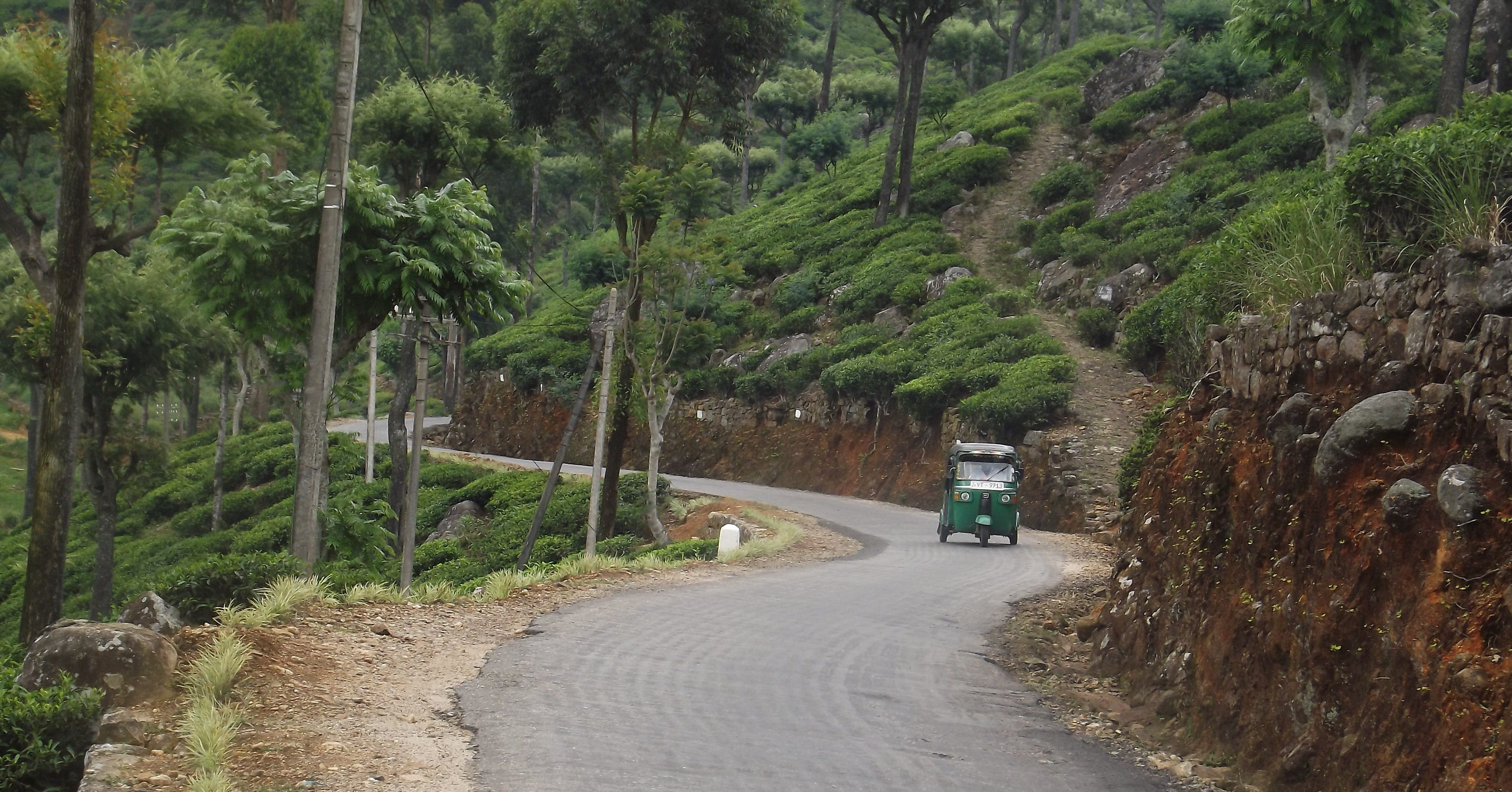
The bus driver’s assistant grabbed my pack the moment I stepped off the tuk-tuk, yanked it through the press of bodies at the stop, and wedged it into the compartment beside the gear shift. He didn’t ask. I didn’t stop him.
An hour south of Colombo, watching jungle flatten into paddy field through a window that wouldn’t quite close, I realised I’d stopped thinking about the bag.
That shift from vigilance to comfort took three days to arrive. It started in Colombo, continued through Dambulla, and finished somewhere on the Kandy road, where drivers pass each other on mountain bends with a confidence suggesting either great skill or complete indifference to consequence. Each driver, each assistant, each stranger who pointed at my screen and then pointed left added a small deposit to whatever account my head was quietly keeping. Nothing deliberate. More like a recalibration.
I’d found Leslie through CouchSurfing. The platform had surfaced two responses for my stay in Kandy. The second host’s feedback pages described an expectation of financial reciprocity, a side business dressed as hospitality. I’ve been surfing long enough to know the difference. I wrote to Leslie.
He replied that he’d already accepted someone else. And that I was welcome too. He’d leave work early to meet me, give a tuk-tuk driver his number to call at the junction, and have a room sorted by the time I arrived. He told me not to worry about the English; he’d guide the driver in.
I read the message twice.
The logistics alone, no, the choice alone. Rearranging his afternoon, briefing a driver he’d never spoken to, clearing space in a house already hosting someone. No platform had asked him to do any of it. No Super Host badge, no insurance backstop, no algorithm prompting the behaviour.
I was carrying a handful of Jawbone headsets in the side pocket of my pack. The company had given me units from the previous generation to bring on the road as gifts for hosts. Gifts. A way of saying something that a handshake doesn’t quite reach across a cultural distance.
The headset went to Leslie across his dinner table, in a room where the other surfer was already asleep. I put it in his hand. He turned it over, asked what it did. I explained the fitness tracking, the sleep monitoring. He laughed a little, put it on his wrist. His daughter came in and asked about it. He showed her. That was the exchange.
On my phone in a Colombo guesthouse the week before, I’d read that Airbnb passed ten million guest nights booked. Uber launched UberX in London around the same time. The coverage around both companies was settling into a phrase: the sharing economy. Platforms that unlock underutilised assets, matching supply with demand through software.
Sitting in Leslie’s kitchen, I kept turning that framing over.
The people building Airbnb are solving a real problem: trust between strangers at the point of transaction. Verified identity and a ratings layer that makes both sides legible. The friction they’re removing is the reason most people never opened their homes to strangers. Remove that friction and a market that couldn’t exist begins to.
But Leslie didn’t open his home because friction was removed. He extended credit, social, reputational, human, to someone he’d never met, based on testimonials written by people he’d also never meet. The platform didn’t produce that impulse. It gave it somewhere to land.
CouchSurfing went for-profit two years ago. I watched that from inside the community. The model didn’t collapse, but the exchanges shifted, a slight tilt from gift toward service. Users who left talked about it in language that was hard to pin down. The thing they were describing was a category change. The same action, inside a different frame.
The sharing economy companies scaling right now are solving a different problem than the one Leslie represents. They’re making it possible to trust a stranger you’ve been algorithmically matched with. Leslie made it possible to trust a stranger vouched for by humans, at cost to himself, with no recovery mechanism if I turned out to be a problem.
On the bus back from Kandy, the driver’s assistant stowed my bag without asking, and I let it go. Four days ago I would not have done that. The system had built that trust stop by stop, in a way that no app had touched.
The question is whether the apps are replacing the friction or the texture. Those are different things to lose, and the coverage building around the sharing economy is not treating them as separate yet.