Introduction
A public art trail in Manchester had placed 102 bee statues across the city. Each one was distinct — in colour, in design, in where it sat within the urban fabric. Most people photographed them for their own feeds and moved on. I looked at the collection differently. The bees were already a visual catalogue, and the city had a pub culture with just as much variety and character. The two things seemed like they belonged together. I set up an account and called it Beers in the City.
The Concept
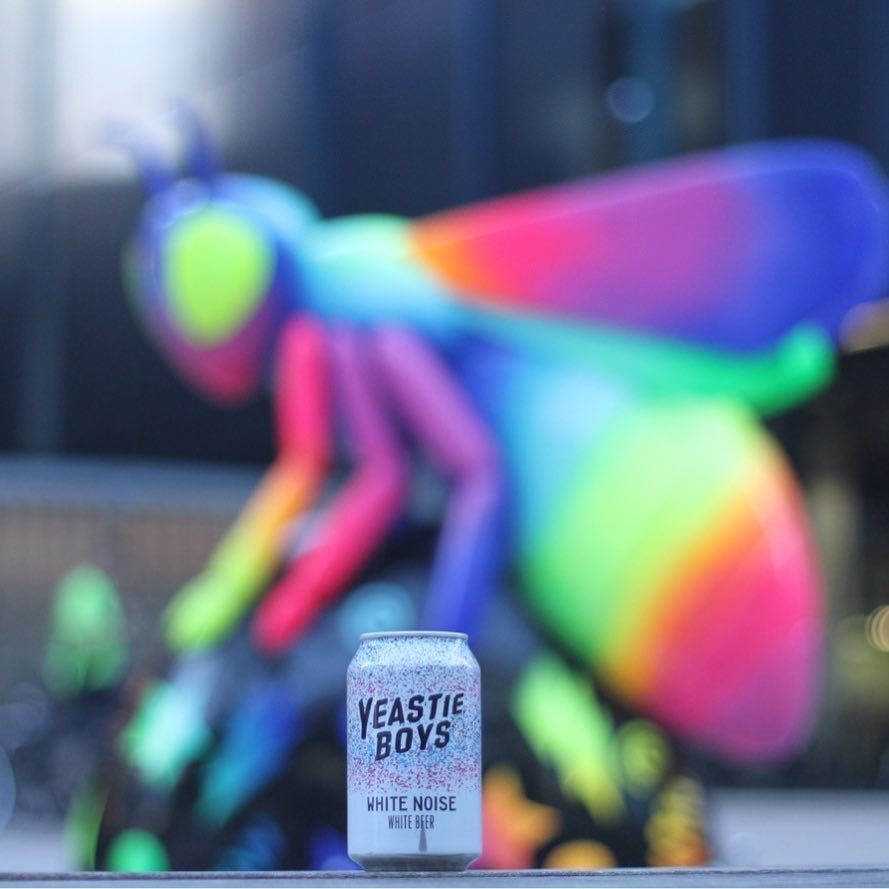
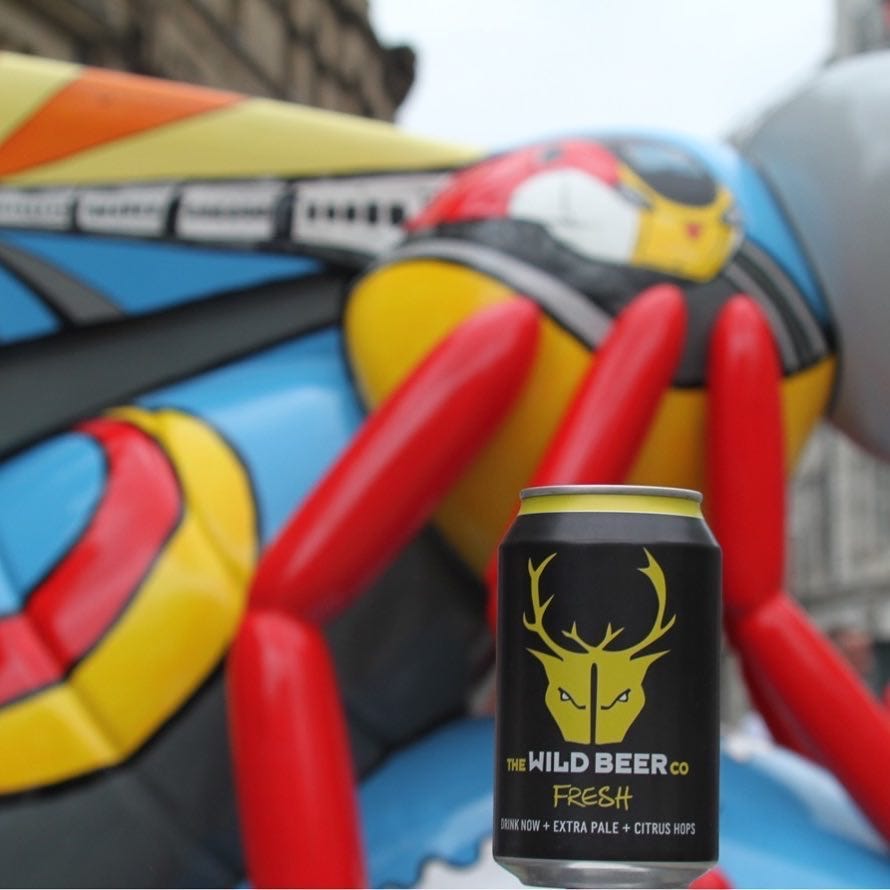
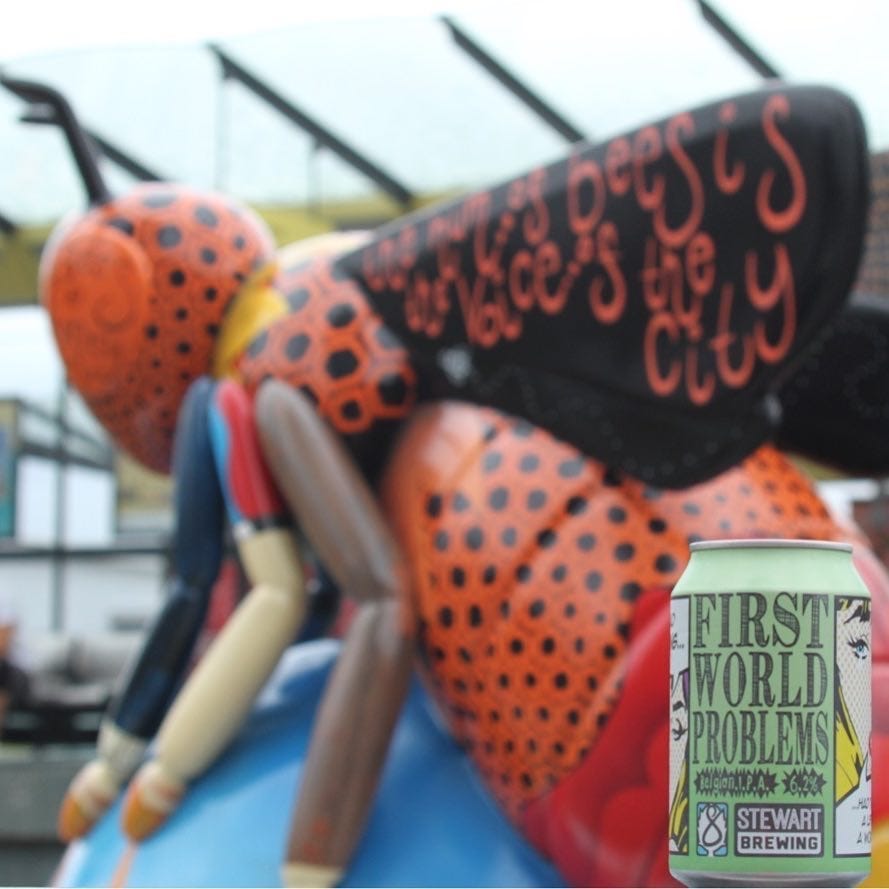
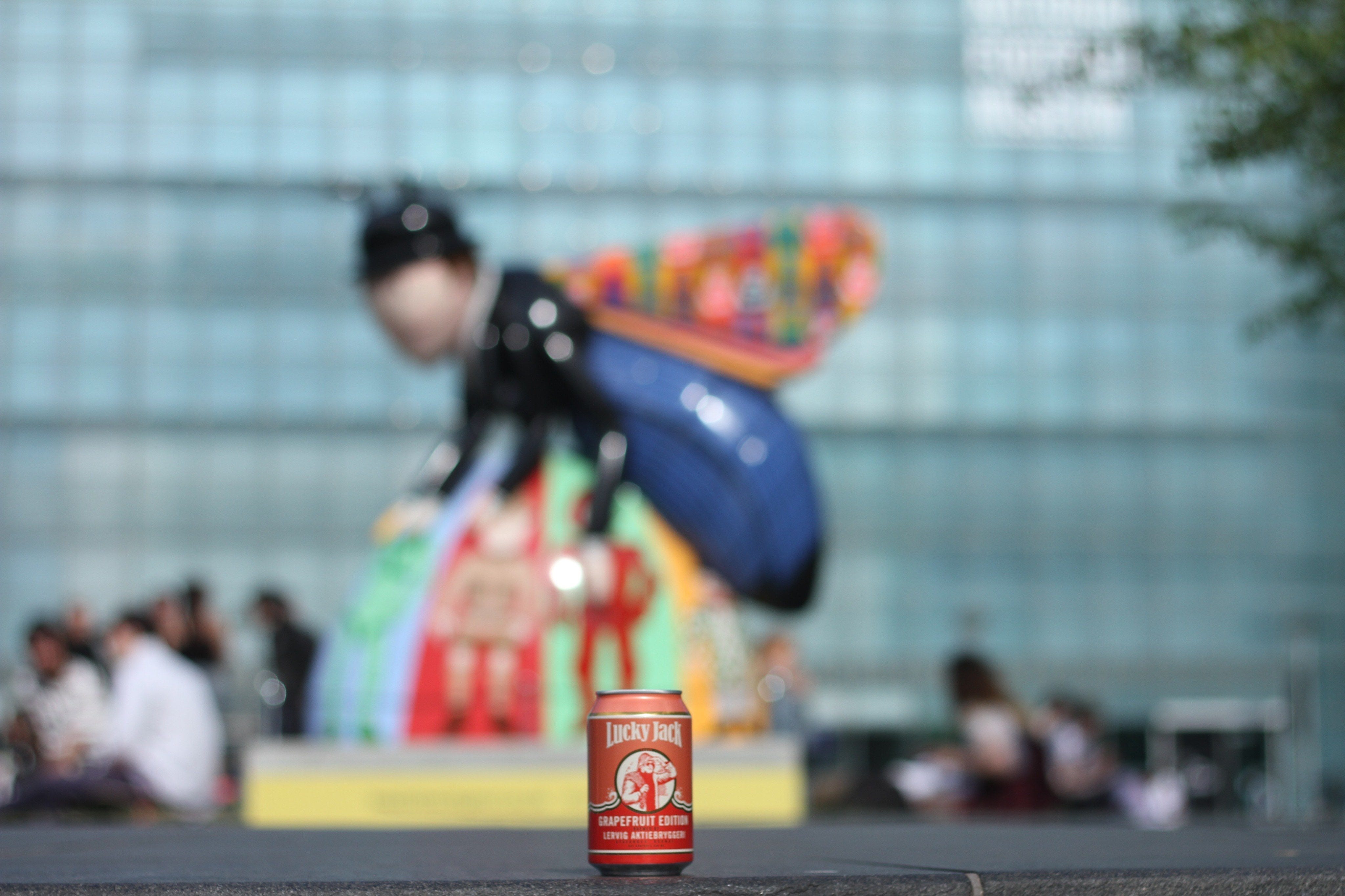
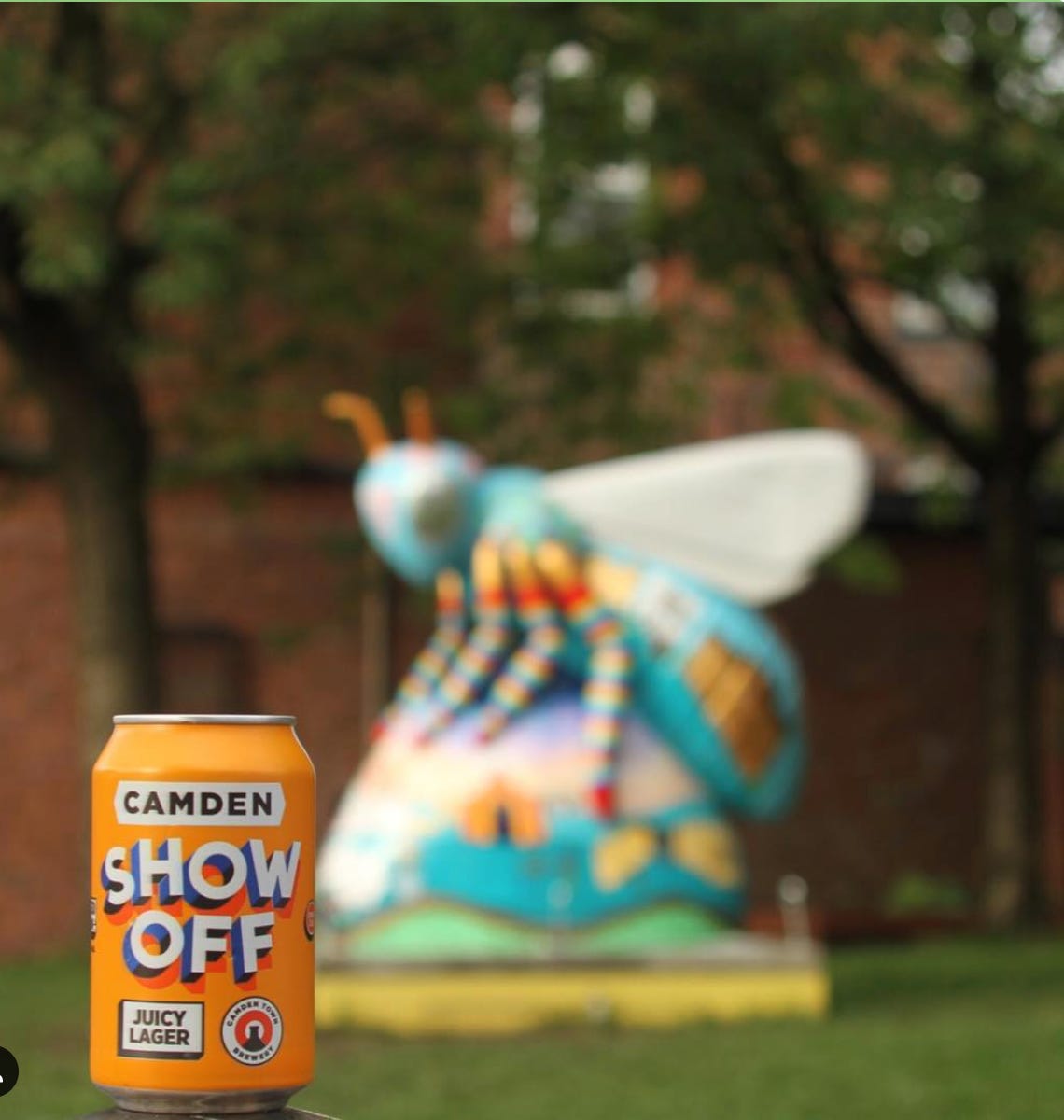
The rule was simple and self-imposed: one statue, one beer, no repeats, and the beer’s branding had to have some visual relationship to the colour of the bee. That last constraint was not arbitrary. It gave each image a coherence that made the project feel deliberate rather than incidental. A pale gold lager against a yellow-and-black bee. A ruby ale against a deep red one. The match did not have to be literal, but it had to be considered.
The timeline was six weeks. With 102 statues spread across the city, that left no room for slow days. I planned the route starting from the city centre and working outward, which made logistical sense but also meant the earlier shoots happened where foot traffic was densest.
The Shoot
I worked with a 50mm lens throughout. It is a focal length that reads as natural, close to how the eye sees, and it keeps the beer and the bee in the same frame without either element dominating or distorting. A spotter came with me on the busier locations to manage pedestrian traffic — not to clear the area, but to create brief windows where the shot could be clean without it being staged.
Nothing was retouched. That was a decision made before the first photo was taken and held through to the last. Retouching would have introduced a polish that did not belong to what the project was. It was a street photography project with a concept, not a campaign with a production budget, and the images needed to look like the former.
What Happened
The account grew past 12,000 followers within the project’s run. Two regional media publishers picked it up and ran coverage. Neither of those outcomes was the goal when the account launched — the goal was to finish the trail before the statues were removed and see whether the concept held up across 102 iterations.
It did. Some images worked better than others. A few beers were harder to match visually and required more lateral thinking about what the bee’s colour actually communicated. But the project had an internal logic that made each image legible as part of the set, and that consistency was probably what made it travel.
Conclusion
The project was not built for reach. It was built around a constraint — 102 statues, 102 beers, one city, six weeks — and the constraint did most of the creative work. A clear rule applied consistently over time produces something that reads as intentional even when the individual decisions are improvised. That is a useful thing to understand, and it is the kind of thing you only learn by finishing something rather than just starting it.